
Olympus 2249 · Systems · Guide
Olympus 2249 Features — Store Facts
Olympus 2249 features: five Karmic Types, five peaceful specializations, turn-based combat with hazards and stamina, crafting, stealth and a day/night cycle.
By the Game Atlas team · Updated 2026-10-10
On this page (8)
Olympus 2249 ships with a documented feature set that splits into three groups: identity systems, combat and conversation, and a survival toolbox. The headline features are five Karmic Types that shape dialogue, quests and story, turn-based combat that runs on positioning, environmental hazards and Stamina, and five peaceful specializations that open non-combat solutions. Everything below is taken from the official Steam store page and its appdetails feed.
What the official feature list covers
The store description frames the feature list as a deep toolbox you can experiment with even in Early Access, which is an accurate summary of what is documented. Identity, combat, conversation and world simulation each get explicit systems rather than vague promises.
- Five Karmic Types, including starts like Moralist and Asshole, plus anything in between.
- Five peaceful specializations, each unlocking new dialogue options and new ways to solve problems.
- Turn-based combat with aimed shots, hazards and Stamina-powered abilities.
- Branching dialogue with consequences for factions and quest access.
- Crafting, stealth, armor and environmental systems for the world layer.
Combat, dialogue and Karmic Type systems
Combat is turn-based and designed around the battlefield rather than raw damage numbers. The description names fuel barrels you can kick into enemies and detonate, oil spills you can ignite, electricity, traps, called shots at arms, legs or the head, dismemberment and special abilities paid for with Stamina. Hard fights are described as puzzles with more than one correct solution.
Conversation is treated as an equally serious system. The store page says there are no endless lists of "Tell me about..." questions, that conversations flow like real ones, and that your Karmic Type changes how people react to you. Consequences are permanent enough that a faction may refuse you or a quest may never be offered.
World, survival and Early Access systems
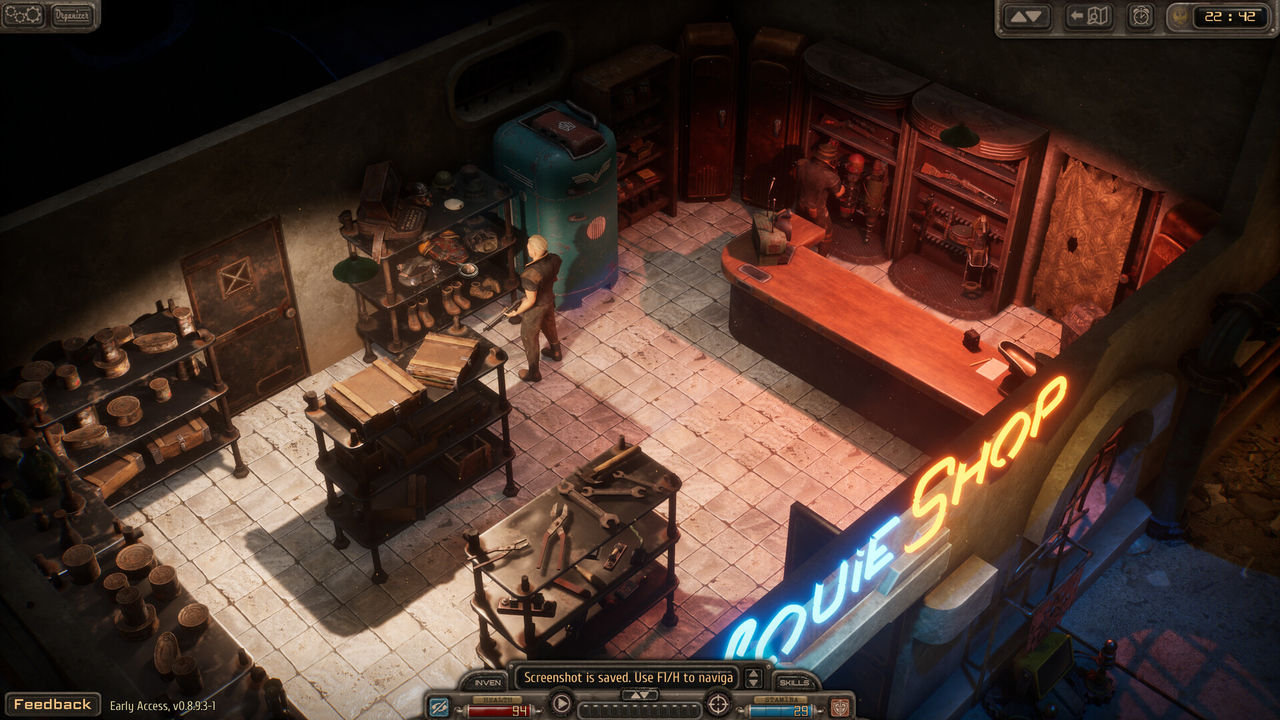
The world layer stacks several simulation systems on top of each other. Desert storms are documented as reshaping the gameplay while they are active, and radiation and poison zones create hazardous environments you have to route around. A day/night cycle drives NPC daily routines and their own beds, and an armor system sits alongside the crafting system.
Random encounters and raids use procedural enemy and loot generation, which keeps repeat fights from being fixed set pieces. Features that are not documented include multiplayer or co-op, Steam Workshop mod support, and any difficulty or accessibility options beyond the Steam tags for Adjustable Difficulty and Playable without Timed Input. For how these systems fit together in play, see the gameplay overview.
FAQ
1.What are the headline features of Olympus 2249?
Five Karmic Types that shape dialogue, quests and story, turn-based combat built on positioning, hazards and stamina, and five peaceful specializations that unlock non-combat solutions.
2.Does Olympus 2249 have multiplayer or co-op?
No. Steam lists it as single-player only, and no co-op or multiplayer mode is documented on the store page.
3.Does the game support mods?
Not documented yet. Steam Workshop is not listed among its features, so there is no official Steam mod channel.
4.Is there crafting and stealth?
Yes. The store description names both crafting and stealth as part of the toolbox available in Early Access.
5.What is the day/night cycle for?
The official description says NPCs follow their own daily routines and have their own beds, so the cycle changes who is where in the world.
More in Systems
More systems pages in Olympus 2249.
References
- Olympus 2249 on Steam
- Steam appdetails for Olympus 2249 (appid 5094490)
- Olympus 2249 news hub on Steam
- Olympus 2249 community hub on Steam
Facts on this page are compiled from the references above. Items marked "to confirm" are single-source and not yet verified.