
Olympus 2249 · Systems · Guide
Olympus 2249 Gameplay — Core Loop and Runs
Olympus 2249 gameplay explained: the turn-based combat loop, Karmic Type dialogue, stealth and crafting systems, and how difficulty and saves work.
By the Game Atlas team · Updated 2026-10-10
On this page (10)
- The core loop, step by step
- Combat is a puzzle, not a damage race
- Dialogue, karma and branching quests
- Stealth, crafting and the environment systems
- Difficulty, saves and the Early Access state
- Is combat in Olympus 2249 real-time or turn-based?
- What can you interact with during a fight?
- What is Stamina used for?
- Can you finish the game without fighting?
- Is there permadeath or a death penalty?
Olympus 2249 is a single-player, turn-based cRPG, and its gameplay rests on two pillars the store page spells out: turn-based tactical combat built around positioning and the environment, and a Karmic Type that steers dialogue, quests and story. Everything else, including stealth, crafting and survival hazards, feeds into those two. The gameplay below describes only what Dieselship Studio documents on the official store page.
The core loop, step by step
The rhythm is easy to describe because the store page is specific about it. You travel a post-apocalyptic dieselpunk map, take quests, resolve them through conversation or combat, and the game reacts to how you did it. Quests are built around using your skills and systems, and the description notes that they rarely ask you to just kill someone; even a simple fetch quest is framed as an invitation to a small adventure.
A single loop therefore looks like this in practice:
- Explore and talk, because conversations open quests and factions rather than just feeding you lore.
- Choose an approach: a dialogue route, a stealth route, or a turn-based fight.
- Spend Stamina on special combat abilities when a fight turns, or use hazards instead of raw damage.
- Collect loot from encounters, which the description says uses procedural enemy and loot generation for random encounters and raids.
- Feed the results back into crafting, armor and your chosen specialization.
Combat is a puzzle, not a damage race
Combat is turn-based, so the pressure comes from decisions rather than reflexes. The official description tells you to take your time and position yourself, then names concrete tools: kick a fuel barrel toward an enemy and blow it up, set oil spills ablaze, use electricity and traps, and aim for arms, legs or the head. Dismemberment is a documented system, which is why called shots matter.
Hard fights are explicitly designed as puzzles with more than one correct solution. If your build cannot out-damage a group, the battlefield itself is usually the answer.
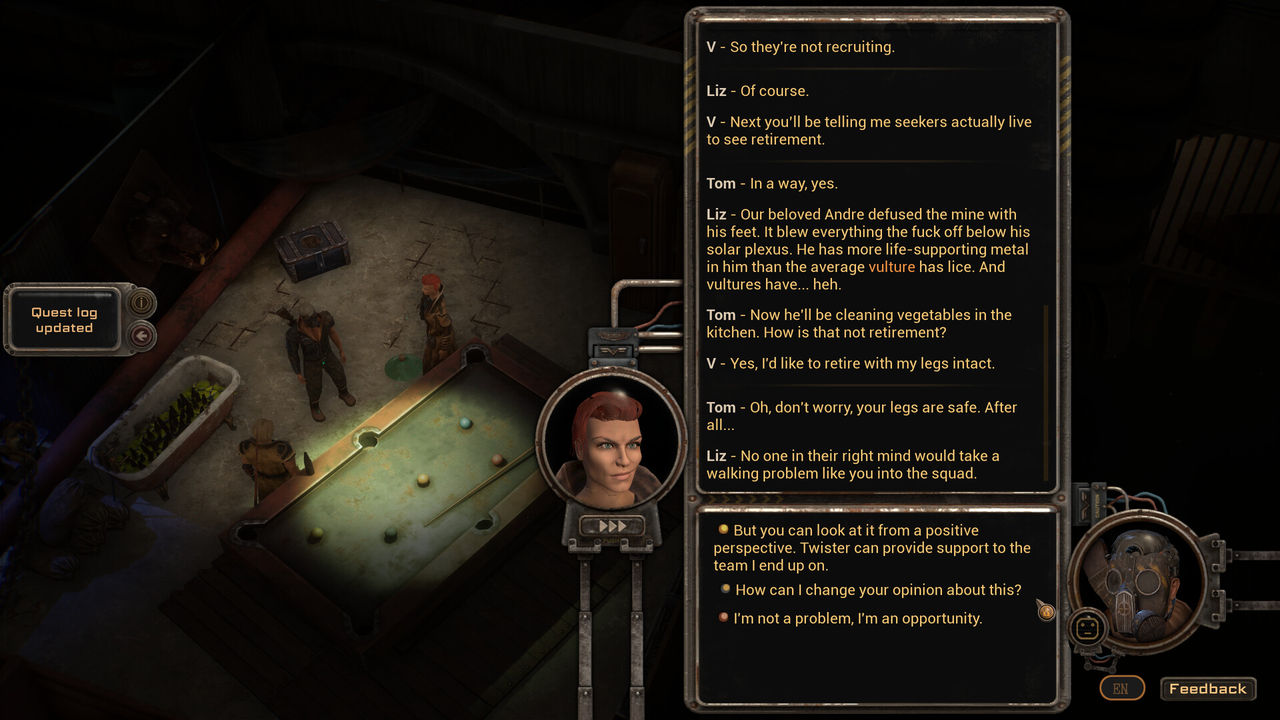
Dialogue, karma and branching quests
Conversations are a full system here, not a menu. The store description rejects endless lists of "Tell me about..." questions and says every conversation flows like a real one, letting you say exactly what you want. The catch is that consequences stick: the text warns about a faction that will not take you in and a quest you will never be offered.
Karma shifts with your choices, and the five Karmic Types change what people say to you. Because you can start as a Moralist, an Asshole, or somewhere in between, two players can sit in the same conversation and see different options.
Stealth, crafting and the environment systems
Beyond combat and dialogue, the store page lists a deep toolbox even in Early Access. The table below maps each named system to what it actually changes during play.
| System | What the store page says it does |
|---|---|
| Peaceful specializations | Five to choose from, each unlocking new dialogue options and new ways to solve problems |
| Crafting | Part of the toolbox you experiment with during Early Access |
| Stealth | A documented non-combat approach to problems |
| Desert storms | Reshape the gameplay while they are active |
| Hazardous environments | Radiation and poison zones you have to work around |
| Day/night cycle | NPCs follow their own daily routines and have their own beds |
| Armor system | A separate layer of gear to manage alongside weapons |
Difficulty, saves and the Early Access state
Steam lists Adjustable Difficulty, Save Anytime, Steam Cloud, Keyboard Only, Mouse Only, Playable without Timed Input and Playable at Your Own Pace as supported features. Together those point to a game you can pace yourself through and reload when a plan fails. A death penalty or permadeath rule is not documented yet.
Because Olympus 2249 is in Early Access, the systems above describe the build as shipped on October 6, 2026, not a finished version. For the surrounding facts, see the release date page and the features list, or start with the beginner guide if you have not picked a Karmic Type yet.
FAQ
1.Is combat in Olympus 2249 real-time or turn-based?
Turn-based. The official description says you can take your time and position yourself, and that hard fights are designed as puzzles with more than one correct solution.
2.What can you interact with during a fight?
The store page names fuel barrels you can kick toward enemies and detonate, oil spills you can set ablaze, electricity, traps, plus aimed shots at arms, legs or the head.
3.What is Stamina used for?
Stamina pays for special combat abilities, per the official description. It is a resource you spend rather than a passive stat.
4.Can you finish the game without fighting?
The store page says you can solve problems without firing a shot, and that quests rarely ask you to simply kill someone. It does not claim the whole game is combat-free.
5.Is there permadeath or a death penalty?
Not documented yet. The store page does not describe a death penalty, and it does list Save Anytime, so reloading a save is available (to confirm).
More in Systems
More systems pages in Olympus 2249.
References
- Olympus 2249 on Steam
- Steam appdetails for Olympus 2249 (appid 5094490)
- Olympus 2249 news hub on Steam
- Olympus 2249 community hub on Steam
Facts on this page are compiled from the references above. Items marked "to confirm" are single-source and not yet verified.