
Echo Weaver · Start Here · Guide
Echo Weaver Beginner Guide — Your First Loops
Echo Weaver beginner guide: how the time-currency loop works, where to start in the Gilded Ruin, and the mistakes that stall new Weavers in the first hour.
By the Game Atlas team · Updated 2026-10-11
On this page (9)
- What Kind of Game Echo Weaver Is
- Starting Your First Loop
- Time Is Currency: The System You Must Learn
- Where Beginners Get Stuck
- What to Read Next
- Do I need to grind upgrades before I can progress?
- What should I do in my very first loop?
- How do I extend the loop when time runs out?
- Why do I keep dying on the same stretch?
Echo Weaver is a knowledge-based Metroidvania from Moonlight Kids, published by Akupara Games and released on Windows and macOS through Steam on October 8, 2026. If you are starting today, the short version is this: you are the last Weaver inside a repeating time loop, there is no upgrade tree to grind, and the only thing that carries between resets is what you personally learn. This beginner guide covers how to open your first loop, which system to learn first, and where new players most often stall.
What Kind of Game Echo Weaver Is
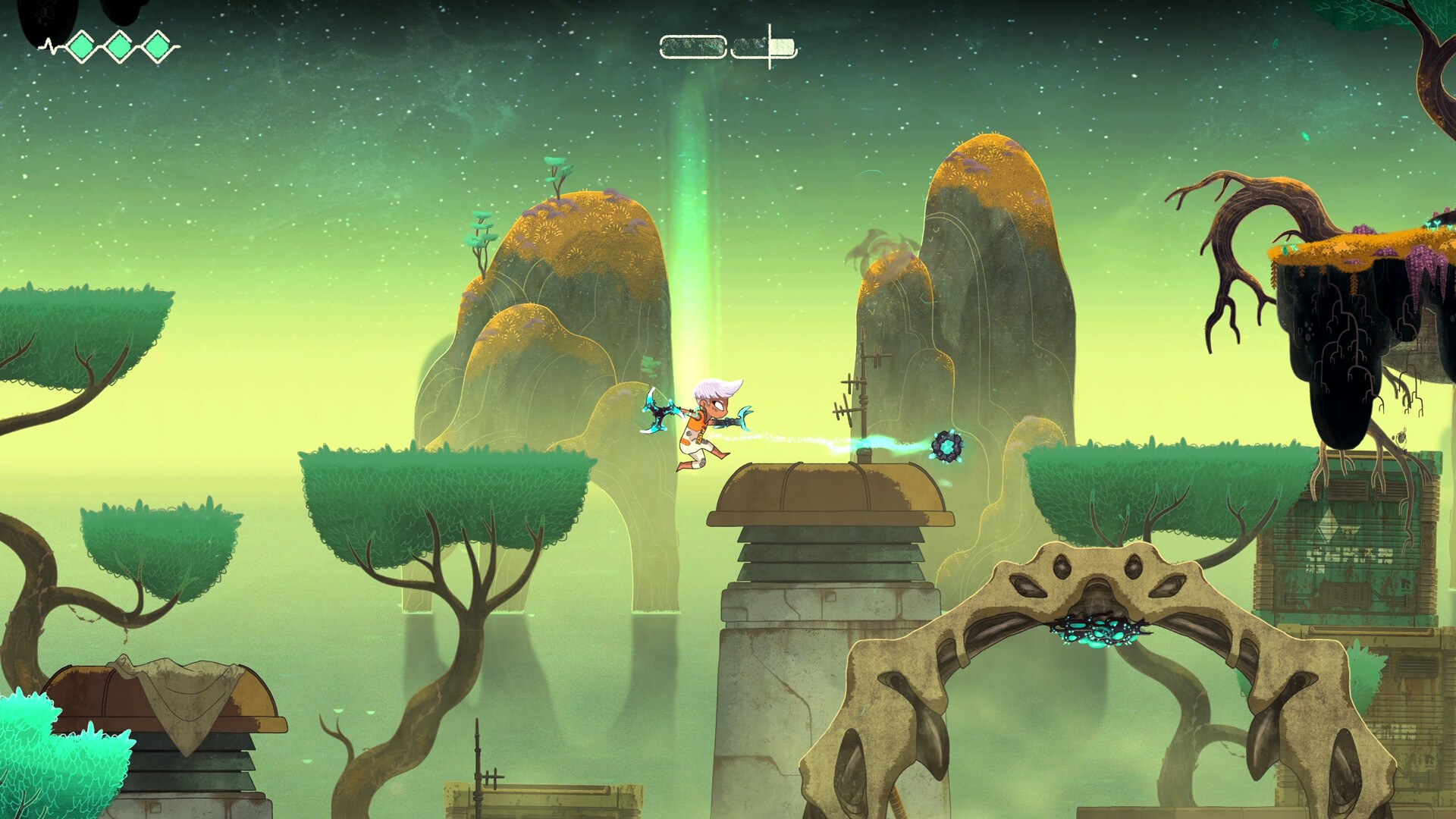
The store page calls Echo Weaver a "metroidbrainia", its own term for a Metroidvania where progress is defined by what you have learned rather than what you have unlocked. The line it uses is "No upgrades, just secrets": every power you will ever wield is already at your disposal from the start, you simply do not know it yet. That single design choice changes how you should play. You are not looking for a better weapon or a stat boost; you are looking for the next piece of understanding that makes an obstacle irrelevant.
The setting is the Gilded Ruin, and the mystery is the Congregation, the group whose actions collapsed their own utopia. The survivors you meet inside the loop are characters rather than shopkeepers, including a pizza-slinging cat who guides you through the ruins, a cranky leader who protects refugees after The Collapse, and a wicked cleric who evangelizes doom to anyone who will listen.
Starting Your First Loop
Your first hour is about reading, not fighting. The store page describes the loop as a consumable resource: you grab pickups to extend it, then draw from that pool to heal, trade and unlock new routes. So your opening habit should be to look at what the loop lets you spend before you spend it, and to note which obstacles you cannot pass yet rather than trying to force them.
- Grab time pickups before you commit to a route, so you have a buffer to draw on.
- Watch a hazard once or twice instead of rushing it; memorizing hazards is the documented route to a clean flow.
- Treat anything you cannot open as a bookmark, not a failure, and come back with a new idea.
- Leave every reset with one new fact: which door, which trigger, which timing.
Time Is Currency: The System You Must Learn
Time in Echo Weaver is not only a countdown to a game over screen; the store page calls the loop itself a consumable resource. That means the same pool you draw on to heal is the pool you draw on to trade and to unlock new routes. Spending it is not automatically wrong, but spending it without a plan is how a promising loop ends early. The practical rule is to decide what a loop is for before you start it: a scouting loop to map a route, or a progress loop to push through something you already understand.
| Element | How the store page describes it |
|---|---|
| Time pool | A consumable resource you extend with pickups, then draw on to heal, trade and unlock new routes |
| Character abilities | Already at your disposal from the start; the store page describes no upgrade tree |
| Progress | Defined by what you have learned rather than what you have unlocked |
Where Beginners Get Stuck
The most common early wall is treating Echo Weaver like a reflex platformer. The store page is explicit that the loop rewards rhythm and routing over raw reflexes, and that memorizing the hazards is what produces the perfect flow through the ruins. If you keep dying to the same stretch, the fix is usually to slow down and watch the pattern rather than to try harder. The second wall is hoarding time. Because the same pool pays for routes and trades, a player who never spends anything also never opens the shortcuts that make later loops shorter.
What to Read Next
Once the first loops click, the two pages worth reading are the gameplay breakdown of the core loop and the time loop page that explains the currency in more detail. If you would rather follow the opening in order, start with the walkthrough, then check the controls page to confirm your input setup before you push deeper.
FAQ
1.Do I need to grind upgrades before I can progress?
No. The store page says there are no upgrades and that every power you will ever wield is already at your disposal. Progress is defined by what you have learned rather than what you have unlocked, so the beginner focus is understanding, not levelling.
2.What should I do in my very first loop?
Scout and remember. Grab time pickups to extend the loop, watch hazards instead of rushing them, and treat every obstacle you cannot pass as a bookmark. Leave the loop with one new fact about a route, a trigger or a timing.
3.How do I extend the loop when time runs out?
The store page describes the loop itself as a consumable resource that you extend by grabbing pickups, then draw from to heal, trade and unlock new routes. Pickups are the documented way to add time, so collect them before committing to a route.
4.Why do I keep dying on the same stretch?
The store page frames the loop as choreography over challenge, rewarding rhythm and routing rather than raw reflexes, and says memorizing hazards is what produces a perfect flow through the ruins. Slow down and learn the pattern instead of trying harder.
More in Start Here
More start here pages in Echo Weaver.
References
- Echo Weaver on Steam
- Echo Weaver app details (Steam Web API)
- Moonlight Kids official site
- Echo Weaver Steam Community
Facts on this page are compiled from the references above. Items marked "to confirm" are single-source and not yet verified.