
Echo Weaver · Systems · Guide
Echo Weaver Time Loop — Why Time Is Currency, Not a Timer
The Echo Weaver time loop explained: why the loop is a consumable currency you extend with pickups, and how a no-upgrades metroidbrainia gates progress.
By the Game Atlas team · Updated 2026-10-11
On this page (7)
The Echo Weaver time loop is not a countdown you merely survive; it is a currency you spend. The store page's own heading for the mechanic is "Time is Currency", and its description is specific: the loop itself is a consumable resource, you grab pickups to extend it, then draw from it to heal, trade, unlock new routes, and more. Pair that with the game's other core line, "No upgrades, just secrets", and you have the whole design in two sentences.
The Loop Is a Consumable Resource
A conventional time loop gives you a fixed window and asks you to beat it. Echo Weaver instead gives you a pool you can grow and spend. Pickups extend the loop, and the pool then pays for healing, trading and unlocking new routes. That single mechanic turns survival into an economy: every heal competes with every shortcut, and a loop that spends nothing on routes leaves you exactly where you started. The store page's phrasing, "and more", is a deliberate hint that the pool has uses beyond the three it names.
No Upgrades, Just Secrets
The store page calls Echo Weaver a "metroidbrainia" and defines progress as what you have learned rather than what you have unlocked. The companion section states that every power you will ever wield is already at your disposal and you simply do not know it yet, and that each new loop offers more clues while every reset becomes another opportunity to optimize. That combination is what makes the loop feel different from a roguelike: there is no meta-progression currency, no permanent stat line, and no build to rebuild, so the loop's only durable output is your understanding.
Choreography over Challenge
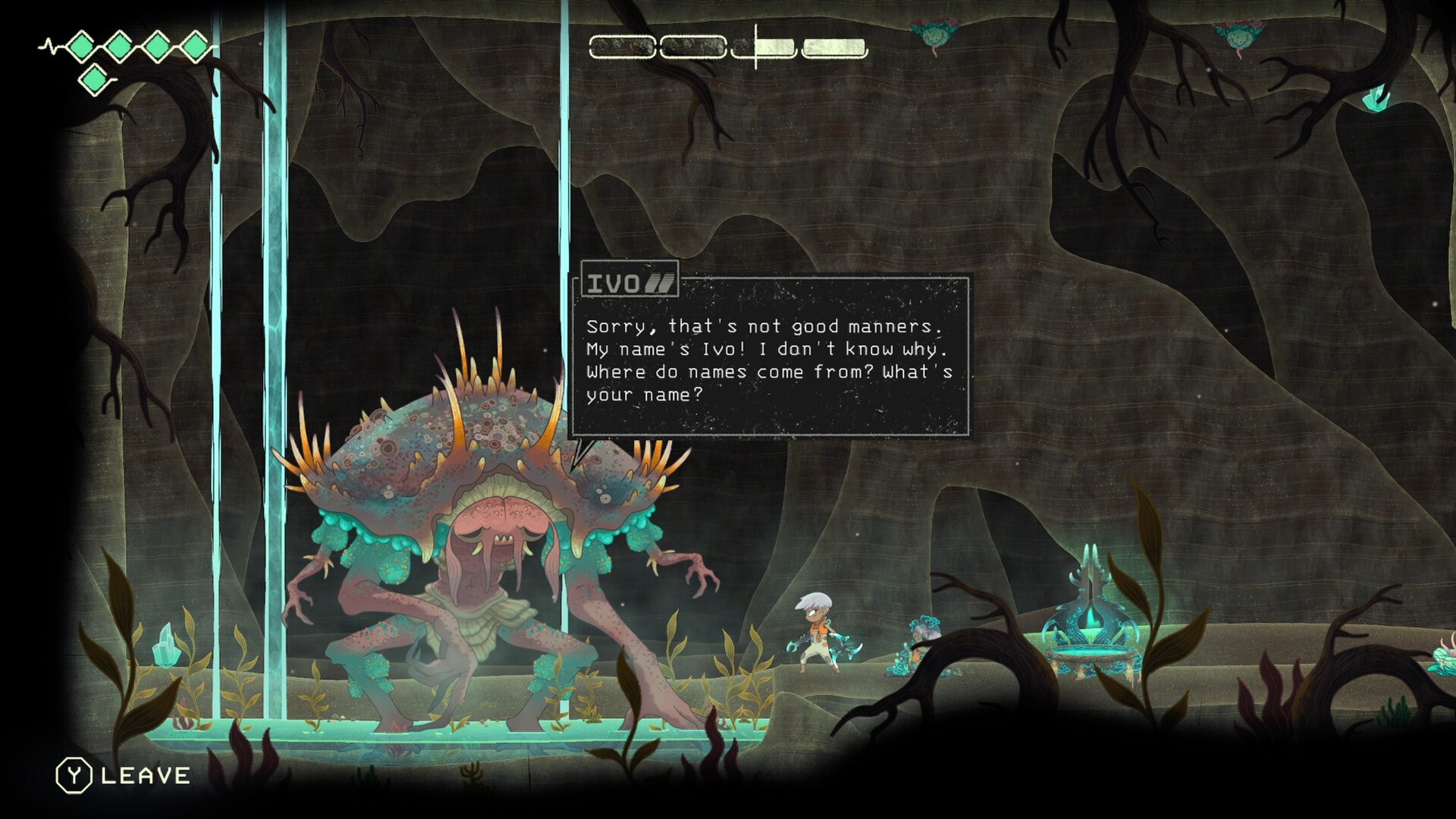
The store page pairs the currency mechanic with the line "Choreography over Challenge", describing a loop that rewards rhythm and routing over raw reflexes and noting that memorizing hazards is what produces the perfect flow through the ruins. In loop terms this means the skill you build is routing, not reaction speed: knowing which stretch costs what, when to heal and when to hold, and which route to open next.
- Learn a hazard's timing once, and it stops costing you a loop.
- Know which stretch is expensive before you enter it.
- Decide whether a given loop is for scouting or for pushing.
It is also why the store page frames the game for fans of Outer Wilds and Ori and the Blind Forest, since it borrows the knowledge gating of the former and the movement of the latter.
FAQ
1.How does the time loop work in Echo Weaver?
The loop is a consumable resource rather than only a countdown. You grab pickups to extend it, then draw from that pool to heal, trade and unlock new routes, so the same budget covers survival and progression.
2.What does No upgrades, just secrets mean?
It is the store page's own line for the progression model. Every power you will ever wield is already at your disposal and you simply do not know it yet, so progress is defined by what you have learned rather than by anything you collect.
3.What is a metroidbrainia?
It is the store page's term for Echo Weaver's genre mix: a Metroidvania where the gates are knowledge checks rather than ability checks. You pass an obstacle by understanding it, not by finding a key.
4.Does the loop punish failure?
The store page frames every reset as another opportunity to optimize and says each new loop offers more clues, so failure costs the loop's remaining time rather than your progress, since progress is knowledge that persists.
More in Systems
More systems pages in Echo Weaver.
References
Facts on this page are compiled from the references above. Items marked "to confirm" are single-source and not yet verified.