
DustFall · Systems · Guide
DustFall Gameplay — Core Loop and Runs
DustFall gameplay explained: the descent loop, six layers and core bosses, what a death costs, and how the scan raises difficulty as you dig.
By the Game Atlas team · Updated 2026-10-11
On this page (9)
- The descent loop, step by step
- How a layer ends and what moves you forward
- Death, retries and what a failed run costs
- Difficulty and pacing
- What is the core loop in DustFall?
- How does a layer end in DustFall?
- What happens when you die in DustFall?
- Does DustFall have difficulty settings?
- Is DustFall playable solo?
DustFall gameplay is built around one repeated action: dig deeper, faster than the thing hunting you. LeoGame's store description defines the game as a "single-player descent roguelite shooter" in which a scanning front pushes down through the underground and sends hunters after you once it locks on. This page walks the loop in order, covering how a descent starts, how a layer ends, what a death costs and how the pressure changes as you go, using only what the official store listing documents. For the first-hour version, see the beginner guide.
The descent loop, step by step
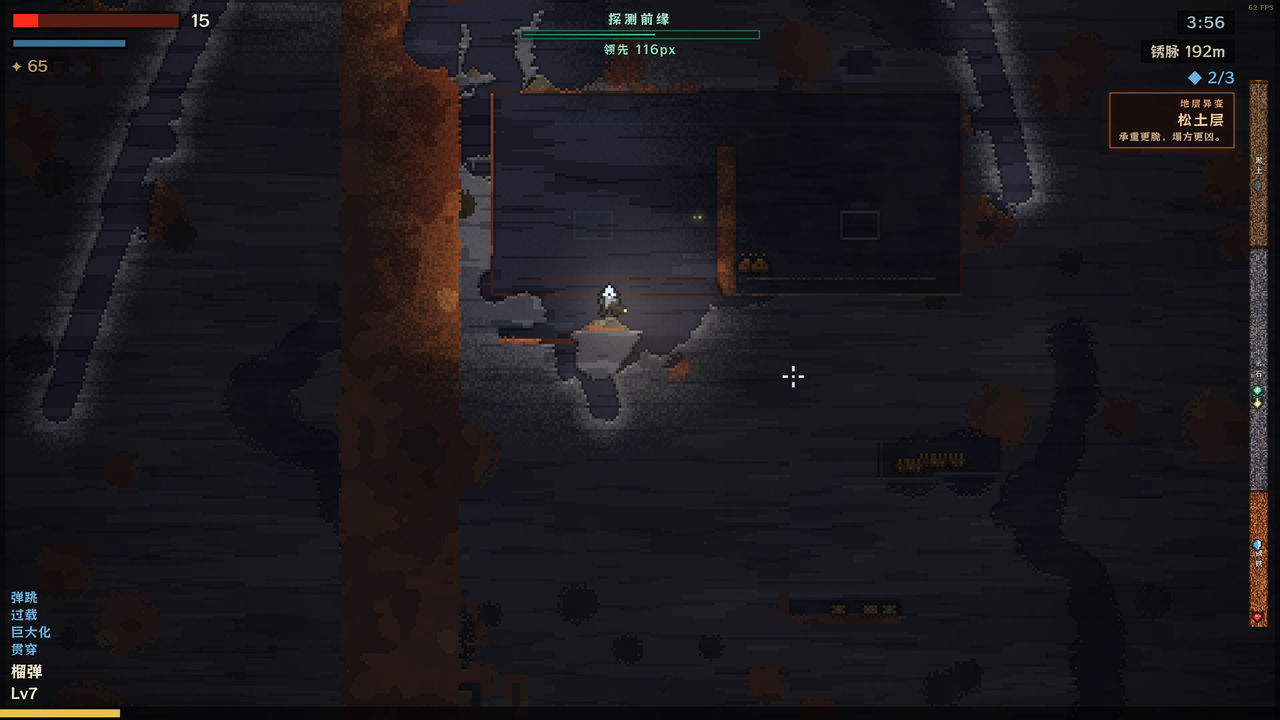
A run begins at the top with a payload choice: the store copy names the Drill Round and the Grenade as starting options. From there the loop is dig, fight and stay ahead of the scan. Official text says the surface scan begins to close in at the start of every descent, that staying too close to the upper layers gets you detected, and that being detected draws increasingly dangerous hunters. Digging beyond the scan's reach earns only a brief moment of safety, so the pressure never fully stops.
The terrain is what separates that loop from a straight corridor shooter. Store copy describes pixels that "flow, burn, explode, and collapse", and lists igniting oil, detonating powder caches and removing supports as ways to open routes, or to drop a ruin on top of whatever is following you.
How a layer ends and what moves you forward
Progress is gated by bosses rather than by distance travelled. Official text is specific: only by reaching the bottom of a layer and defeating its core can you fall into the next ruin. The store page also states that there are six buried ruins, and that each of the six layers has its own terrain materials, environmental reactions, enemy ecosystem and core boss. That layer and boss structure is published on the store copy alone, so treat the six-and-six count as to confirm once you are playing.
| Stage | What the store page documents |
|---|---|
| Descent start | Choose a starting payload such as the Drill Round or Grenade; the surface scan begins to close in |
| Mid-layer | The terrain reacts: oil burns, powder caches explode, unsupported ground collapses |
| Detection | Staying near the upper layers gets you detected and draws deadlier hunters |
| Layer end | Reach the bottom of the layer and defeat its core to fall into the next ruin |
| Full run | Six layers and six core bosses, then three endings plus Cataclysm Mode after the ending |
Death, retries and what a failed run costs
Roguelites live or die on what a failed attempt leaves behind, and this is where DustFall's public documentation is thinnest. The store page describes the loop and the threat, but it never says what persists between runs: no permanent upgrade currency, no unlock list and no meta-progression wording appears in the official description or in the appdetails response for app 5018940.
What is not documented yet, therefore, is the retry economy:
- Whether anything carries over after a failed descent.
- Whether there is a currency or unlock system tied to dying.
- Whether layer layouts are fixed or reshuffled between attempts.
What the official pages do document is the pressure model. The scan starts closing in again at the start of every descent, hunters return, and the only documented reward for extra depth is a brief moment of safety beyond the scan's reach. If you are deciding whether the retry loop suits you, that is the part to judge, because the run itself is documented while the meta layer around it is not.
Difficulty and pacing
The Steam listing carries category tags rather than a difficulty menu: Adjustable Difficulty, Playable at your own pace and Playable without Timed Input are all attached to app 5018940, alongside Custom Volume Controls and Stereo Sound. That combination suggests difficulty can be adjusted and that the design does not rely entirely on reaction-time pressure, though no difficulty tier names or value ranges are published.
Pacing comes from the scan rather than from a visible clock. Because the front keeps advancing, every descent has a soft time budget: spend too long gathering resources near the top and you get found, while moving down quickly trades the things you could have collected for the safety of distance. The build side of those decisions is covered on the weapons page, and features lists what the store page confirms is in the game.
FAQ
1.What is the core loop in DustFall?
Dig, fight and stay ahead of the surface scan. You pick a starting payload, cut through destructible pixel terrain, avoid being detected near the upper layers, and work toward the bottom of the layer.
2.How does a layer end in DustFall?
The official store text says you fall into the next ruin only after reaching the bottom of a layer and defeating its core. There are six layers, and each one has its own terrain materials, environmental reactions, enemy ecosystem and core boss.
3.What happens when you die in DustFall?
Not documented yet. The store page and the appdetails data for app 5018940 describe the descent, the scan and the hunters, but they publish no details on what carries over between attempts.
4.Does DustFall have difficulty settings?
The Steam listing is tagged Adjustable Difficulty, alongside Playable at your own pace and Playable without Timed Input. No difficulty names or value ranges are published on the store page.
5.Is DustFall playable solo?
Yes, and only solo. The listing is tagged Single-player with no multiplayer or co-op categories, and there is no Steam Workshop support.
More in Systems
More systems pages in DustFall.
References
Facts on this page are compiled from the references above. Items marked "to confirm" are single-source and not yet verified.