
Hex Reverse · Systems · Guide
Hex Reverse Cards — Edge Values and Flips
Hex Reverse cards explained: each card carries six edge values, adjacent edges are compared when you place, and a higher value flips the enemy card.
By the Game Atlas team · Updated 2026-10-09
On this page (8)
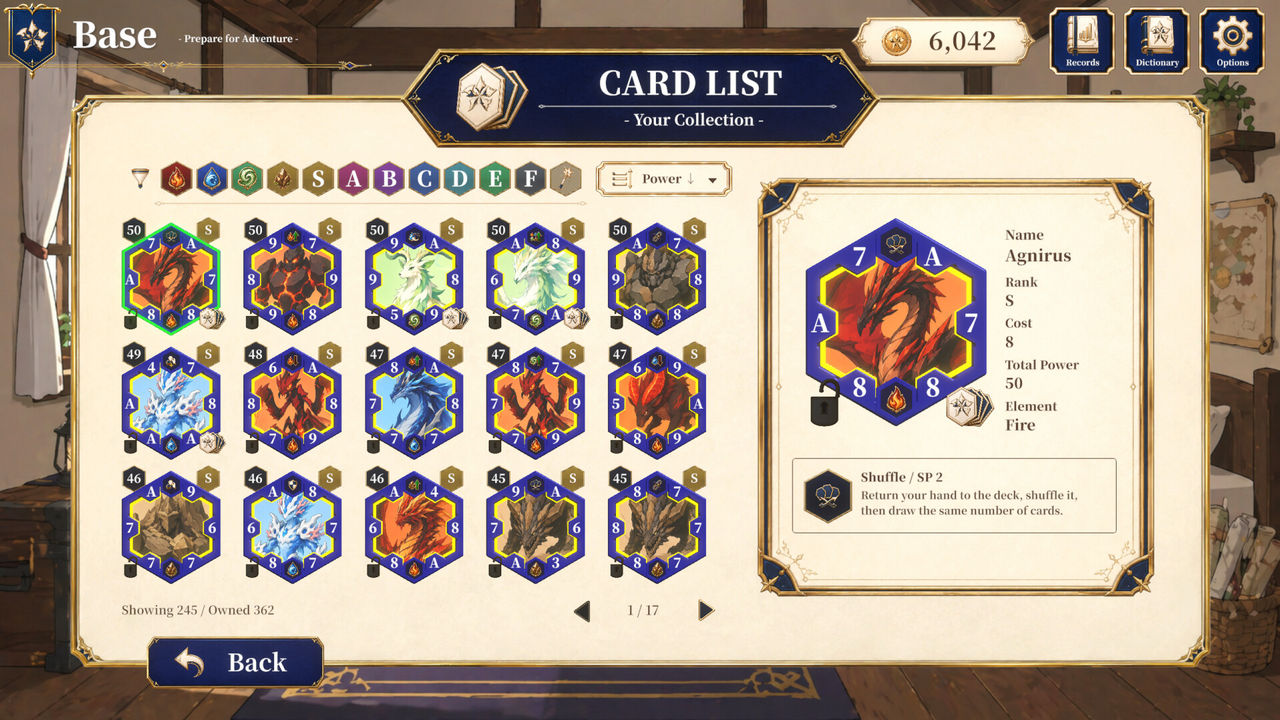
Hex Reverse cards are the pieces you place on the board, and each one carries six values, one for each of its sides. The central rule is that nothing is decided by a card in isolation: its values only matter against the values on the edges it actually touches, and the higher value on a touching pair flips the opposing card to your side.
What the Six Values Mean
Every card has six values, one for each side, which maps onto the six directions a hexagonal cell can be entered from. When you place a card next to an opponent's card, the values on the touching edges are compared, and if your value is higher the opposing card flips to your side. The store page does not explain what happens when the two values are equal, so tie handling is not documented yet, and neither is the range the values can take.
Placing Cards and Flipping Enemy Cards
Because comparisons happen against neighbours, placement is the real decision. The store page's short description reduces the loop to three steps:
- Place cards on the hexagonal board.
- Compare the values on the edges that touch.
- Flip enemy cards to your side.
A card that touches several opponent cards at once offers several comparisons in a single turn, which is how you take control of as much territory as possible on a board of 19 hexagonal spaces. Cards are also defined by more than their six values: SP skills can strengthen a card, change its element or weaken opponents, and equipment upgrades feed into your collection over time.
Growing a Deck Across a Run
Your run deck is not fixed. Each run is a series of battles, and after you win one you choose a single card from a selection taken from your opponent's deck, which is added directly to your current run deck for later battles. At the base between runs, the store page adds systems for building and refining saved decks, buying and selling cards and fusing cards into stronger ones, so the collection grows outside a run as well as inside it. The broader loop is covered on the gameplay page, and the features page lists these systems together.
FAQ
1.How many values does a Hex Reverse card have?
Six, one for each of its sides. The store page states that each card has six values, one for each side, and those values are what get compared in a battle.
2.How do you flip an enemy card?
Place one of your cards next to it. The values on the touching edges are compared, and if your value is higher the opposing card flips to your side.
3.What happens when two touching values are equal?
It is not documented yet. The store page explains the higher-value flip but does not describe how a tie between two touching edges is resolved.
4.How many different cards are in Hex Reverse?
Not documented yet. The store page describes how cards behave and how the deck grows, but it does not publish a card list or a card count.
5.How does your deck grow during a run?
After winning a battle you choose one card from a selection taken from your opponent's deck, and it is added to your current run deck for the battles ahead.
More in Systems
More systems pages in Hex Reverse.
References
- Hex Reverse on Steam
- Hex Reverse app details (Steam Web API)
- Hex Reverse news hub on Steam
- Hex Reverse Steam Community
Facts on this page are compiled from the references above. Items marked "to confirm" are single-source and not yet verified.