
Hex Reverse · Systems · Guide
Hex Reverse Gameplay — Core Loop and Runs
Hex Reverse gameplay explained: the turn loop on the 19-space hex board, SP skills and elements, deck picks after each win, and the upgrades between runs.
By the Game Atlas team · Updated 2026-10-09
On this page (10)
Hex Reverse gameplay is built around one repeating structure: place a card on a hexagonal board, resolve the edge comparisons against whatever it touches, and let the winners flip. That loop sits inside a roguelike frame, so every battle you win feeds a card into your run deck, and every run you finish feeds permanent upgrades back at your base.
The Core Battle Loop
A battle takes place on a field of 19 hexagonal spaces. You and your opponent take turns placing cards, and each card has six values, one for each of its sides. When your card is placed next to an opponent's card, the game compares the values on the touching edges; if your value is higher, the opposing card flips to your side. Because flipping is resolved against neighbours rather than against a health pool, the loop rewards reading the board.
- Read which edges your candidate card would touch.
- Compare those values against the opponent's edges.
- Place where the most comparisons win.
- Let flipped cards become your own board presence.
- Repeat until the board's territory is settled.
Skills, SP and Battle Conditions
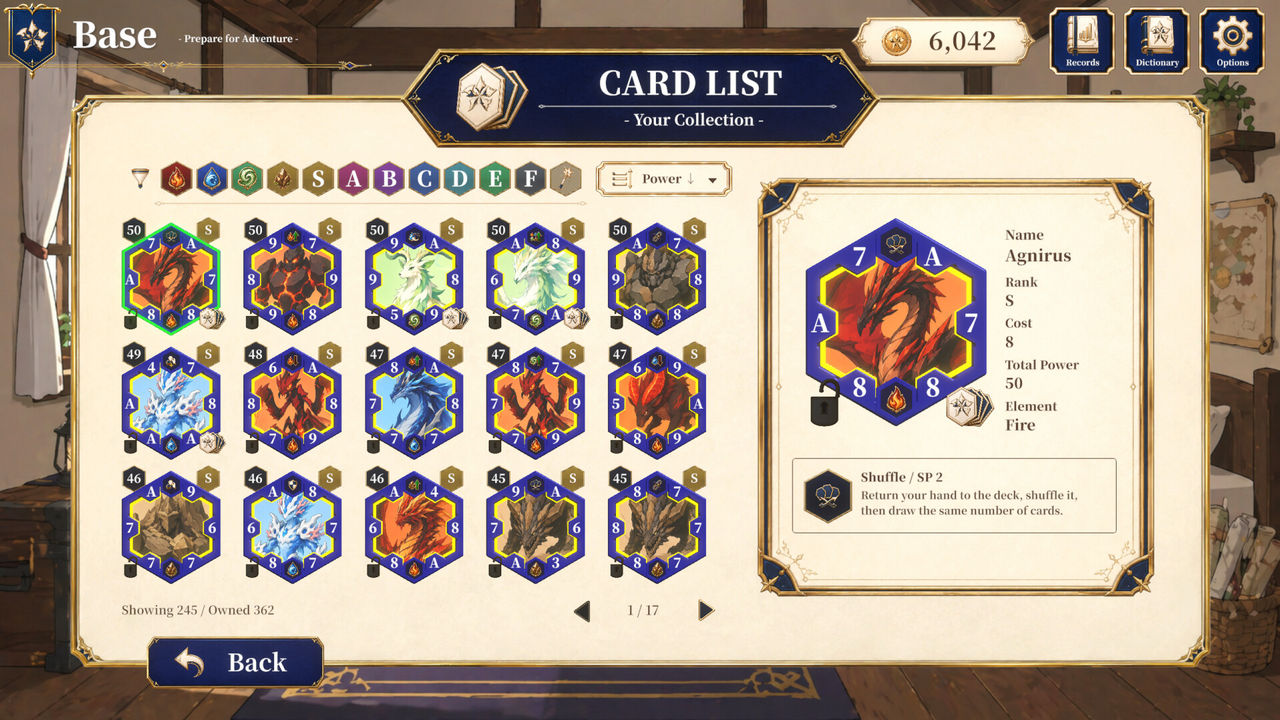
Cards are defined by more than their six values. The store page describes SP, a resource you spend to activate skills that can strengthen cards, change their element, weaken opponents, draw additional cards or alter the flow of battle. On top of that, special rules and unique field conditions can change how a given battle plays out, which forces you to rethink familiar strategies and make the most of the cards you happen to hold. Because these conditions vary from battle to battle, a plan that wins one fight may need to be adjusted in the next.
Deckbuilding Between Battles
A run is a series of battles rather than a single match. After you win a battle, you choose one card from a selection taken from your opponent's deck, and the card is added directly to your current run deck and can be used in the battles ahead. That is the only draft step the store page documents, so the deck grows from what you beat rather than from a fixed starting list, and every pick reshapes the deck for the rest of that run.
Losing a Run and Permanent Progression
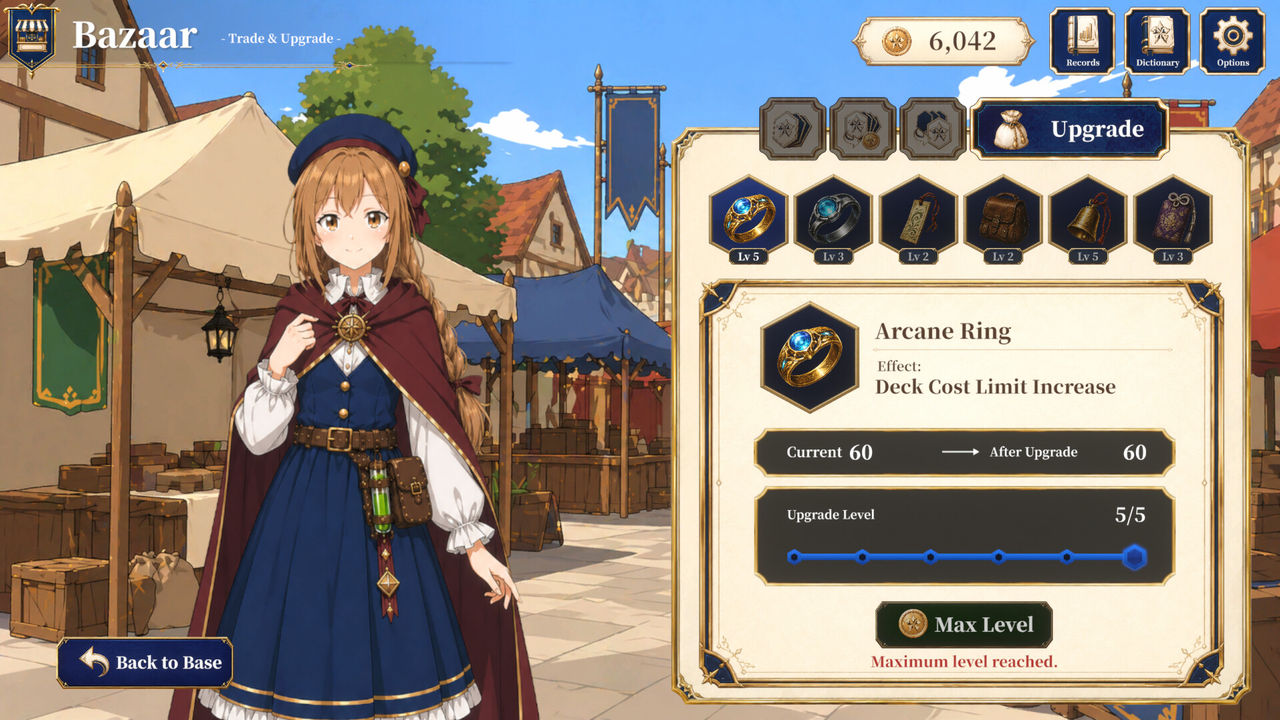
When a run ends you return to your base and prepare for the next expedition. The store page lists the between-run systems as building and refining saved decks, buying and selling cards, fusing cards into stronger ones, and upgrading equipment that provides permanent progression. The same section tells you to strengthen your collection and take on increasingly difficult Rifts, which is the term the game uses for its harder content.
| Layer | What the store page says it does |
|---|---|
| Run deck | Grows from the card you take from each beaten opponent; used in that run |
| Saved decks | Built and refined at your base between expeditions |
| Cards | Bought, sold and fused into stronger cards |
| Equipment | Upgraded for permanent progression |
| Rifts | Increasingly difficult content to take on over time |
Difficulty and Pacing
Difficulty is expressed through the Rifts you take on rather than through a selectable setting described on the store page. The store page does not state how many battles a run contains, how long a run lasts, or how large a deck can grow, so those specifics are not documented yet. What is documented is the direction of travel: each run ends, upgrades persist, and the Rifts get harder.
FAQ
1.What do you actually do in Hex Reverse?
You place cards on a hexagonal board and let the edge comparisons resolve. Each battle is turn-based on a field of 19 hexagonal spaces, and cards you beat flip to your side to give you more territory.
2.How do you win a battle?
Control the board through flips. When you place a card next to an opponent's card, the values on the touching edges are compared, and a higher value flips the opposing card to your side, so territory shifts with each good placement.
3.What is SP used for?
SP activates skills. The store page says these skills can strengthen cards, change their element, weaken opponents, draw additional cards or alter the flow of battle.
4.What carries over between runs?
Permanent equipment upgrades do. The store page describes returning to your base after a run to build and refine saved decks, buy and sell cards, fuse cards and upgrade equipment for permanent progression.
5.Is there a difficulty setting?
The store page does not describe one. It only says you take on increasingly difficult Rifts, and the number of battles per run and the length of a run are not documented yet.
More in Systems
More systems pages in Hex Reverse.
References
- Hex Reverse on Steam
- Hex Reverse app details (Steam Web API)
- Hex Reverse news hub on Steam
- Hex Reverse Steam Community
Facts on this page are compiled from the references above. Items marked "to confirm" are single-source and not yet verified.