
Gladio Mori · Start Here · Guide
Gladio Mori Guide — Best Moveset
Gladio Mori guide: how the gladiator fighter works, from organ damage and holds to clock-position movesets, the move editor and the full 1.0 launch lineup.
By the Game Atlas team · Updated 2026-10-05
On this page (9)
- How combat works at a glance
- Reading a moveset: clock positions and holds
- Weapon notes from the community
- What kind of game is Gladio Mori?
- What is the core combat rule?
- What do the clock positions mean?
- Which weapons are covered by community movesets?
- Is there a move editor?
- How many players does it support online?
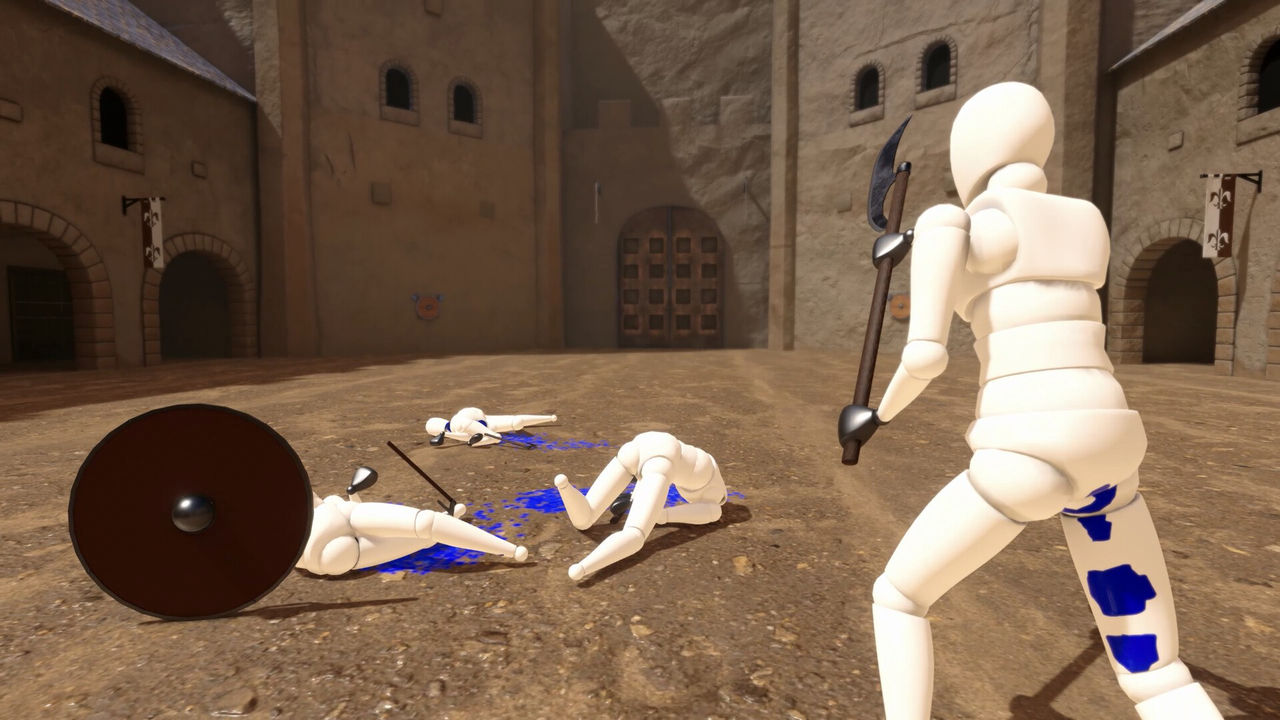
Gladio Mori is a physics-driven gladiator fighting game with no health bars: damage goes into muscles, arteries, vital organs and limbs, and a clean cut can end a fight instantly. This Gladio Mori guide covers the systems that actually decide rounds, using the official Steam description, the publisher feature list and the community moveset write-ups that players have used since the demo. It is aimed at the 1.0 build that launched on September 16, 2026.
How combat works at a glance
The organ model is the whole game. Official text says injured muscles weaken your strikes, severed arteries cause you to bleed out, and pierced vitals mean instant death, and the feature list adds stamina and dismemberment to the same system. That changes how you read a fight: you are not counting hits, you are watching where your opponent is open and whether your own guard still covers the important parts.
Armour follows the same logic. The publisher describes realistic, historically inspired equipment that behaves as it should, with plate blocking strikes while leaving weak points exposed. A shield is a moving guard rather than a wall, which is why the moveset write-ups treat every attack as having a defensive direction as well as an offensive one.
- Muscles: damaged limbs weaken that limb's strikes.
- Arteries: a severed artery bleeds the fighter out over time.
- Vitals: a pierced vital organ ends the round immediately.
- Stamina and dismemberment: both are listed as core systems.
Reading a moveset: clock positions and holds
The most useful community document on the game explains the hold system plainly. Holding a key makes that final frame your default stance, and you can throw another attack while holding, returning to the held guard when you release. Holding the low attack keeps you crouched so you can strike from there, and holding special keeps a shield in front of an already-overlapping sword. The same write-up describes each strike as hitting like an hour on a clock face while also setting which guard direction it covers.
| Attack | Direction | Guard |
|---|---|---|
| Special | 10:30 | High left |
| Left | 10:30 | Left |
| High | 12 o'clock | Left |
| Right | 3 o'clock | High |
| Low | 5 o'clock | High |
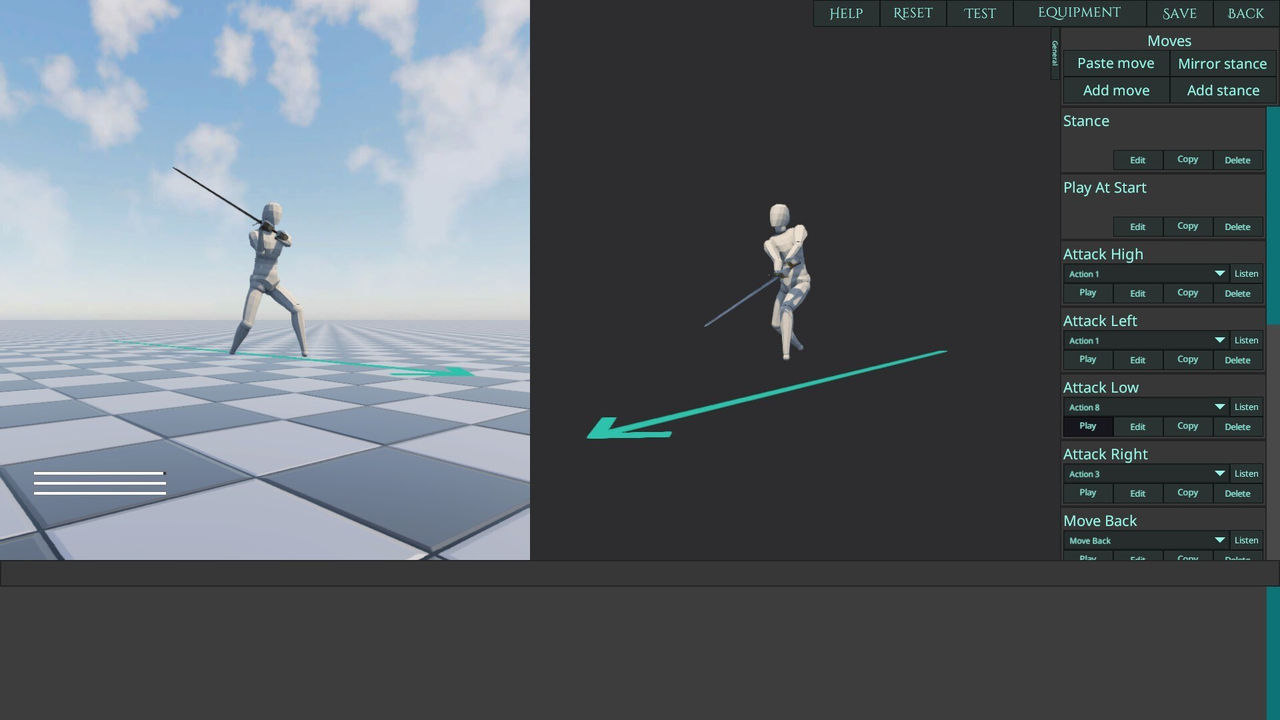
The keyboard layout is designed around the same idea. The write-up notes that the keys are arranged to mirror the direction each strike travels, with the thrust at the centre of the cluster and the directional attacks around it, which is why the layout feels strange until the pattern clicks.
Weapon notes from the community
Not every weapon behaves like the sword and shield. Hatchets follow the same all-attacks-are-blocks rule but guard a smaller area, and the write-up suggests chaining a right or high after the special to keep pressure on. The bardiche is the exception: only its low stance ends in a guard, which the author says can be worked around, and its stabs leave you extended because there is no guarding action attached to them.
The practical advice in that thread is worth repeating for anyone moving from the campaign into lobbies: passing a shield or bardiche to your right with the low attack or low guard and then countering once you are past the pointy end, and not playing too defensively with the slow weapons because you take damage faster that way. Those are player findings from the game's discussion board rather than developer guidance, so treat them as to confirm and test them in a private match.
FAQ
1.What kind of game is Gladio Mori?
It is a physics-driven gladiator fighting game with no health bars. Opponents take damage to muscles, arteries, vital organs and limbs, and the game also models stamina and dismemberment. It released in version 1.0 on September 16, 2026 for PC, PlayStation 5 and Xbox Series X/S.
2.What is the core combat rule?
Every attack is also a block. A community moveset write-up explains that holding a key makes that final frame your default guard, so you can throw another attack and then return to the held guard when you release, with some limitations.
3.What do the clock positions mean?
They describe both the path a strike travels and the direction the guard covers. For a sword and shield moveset the high attack is described as striking at 12 o'clock and setting a left guard, while the right attack strikes at 3 o'clock and sets a high guard.
4.Which weapons are covered by community movesets?
The most detailed community write-up covers sword and shield, hatchets, and the bardiche. It notes that the bardiche is the odd one out, because only its low stance ends in a guard, though the write-up says that can be worked around.
5.Is there a move editor?
Yes. The publisher key features describe a fully customizable move editor that lets you animate your fighter's body to design efficient strikes, recreate moves from films or games, or build chaotic combos, with community-created movesets available to borrow.
6.How many players does it support online?
Online arenas take up to four players, and crossplay connects Steam, PlayStation 5 and Xbox Series X/S in the same pool. Local split-screen is also supported, and the launch press material lists up to four players for that mode as well.
More in Start Here
More start here pages in Gladio Mori.
References
- Observations on Movesets (first demo) :: Gladio Mori Discussions
- Mastering Gladio Mori Combat Techniques
- Gladio Mori on Steam
Facts on this page are compiled from the references above. Items marked "to confirm" are single-source and not yet verified.