
Anshi · Systems · Guide
Anshi Gameplay — Cycles, Morale and the Two Phases
Anshi gameplay explained: the two phases of every level, how cards shift action cycles, how Morale decides initiative, and what Tower Mode changes.
By the Game Atlas team · Updated 2026-10-11
On this page (12)
- The Two Phases and What Each One Is For
- How Cards Shift Action Cycles
- Morale as Initiative, Resource and Power
- Starting the Fight, and Wavering
- Normal Mode Versus Tower Mode
- Failure, Restarts and the Cost of a Bad Attempt
- Pacing Across Nine Levels
- What is the core loop in Anshi?
- Is there randomness in Anshi?
- How do cards affect combat?
- What happens if I start the battle too early?
- What is the difference between Normal Mode and Tower Mode?
Anshi gameplay is one repeating structure wrapped around nine levels: prepare under pressure in the Stealth Phase, then fight a Boss with a turn order that you are partly responsible for building. Your cards do not deal damage directly; they shift your own pieces' action cycles so that the skills you need arrive when you need them. The store page describes the whole game as having no gameplay randomness, so each loss points back at a decision rather than at a draw.
The Two Phases and What Each One Is For
The store page says the cards available to you come in two distinct phases, and it names the first: the Stealth Phase. In that phase the Boss spreads Rumors that prevent your pieces from gaining Morale, and it launches night raids that drain their Health. You are answering both problems from a limited hand, so the phase is about protecting two resources at once rather than racing a damage bar.
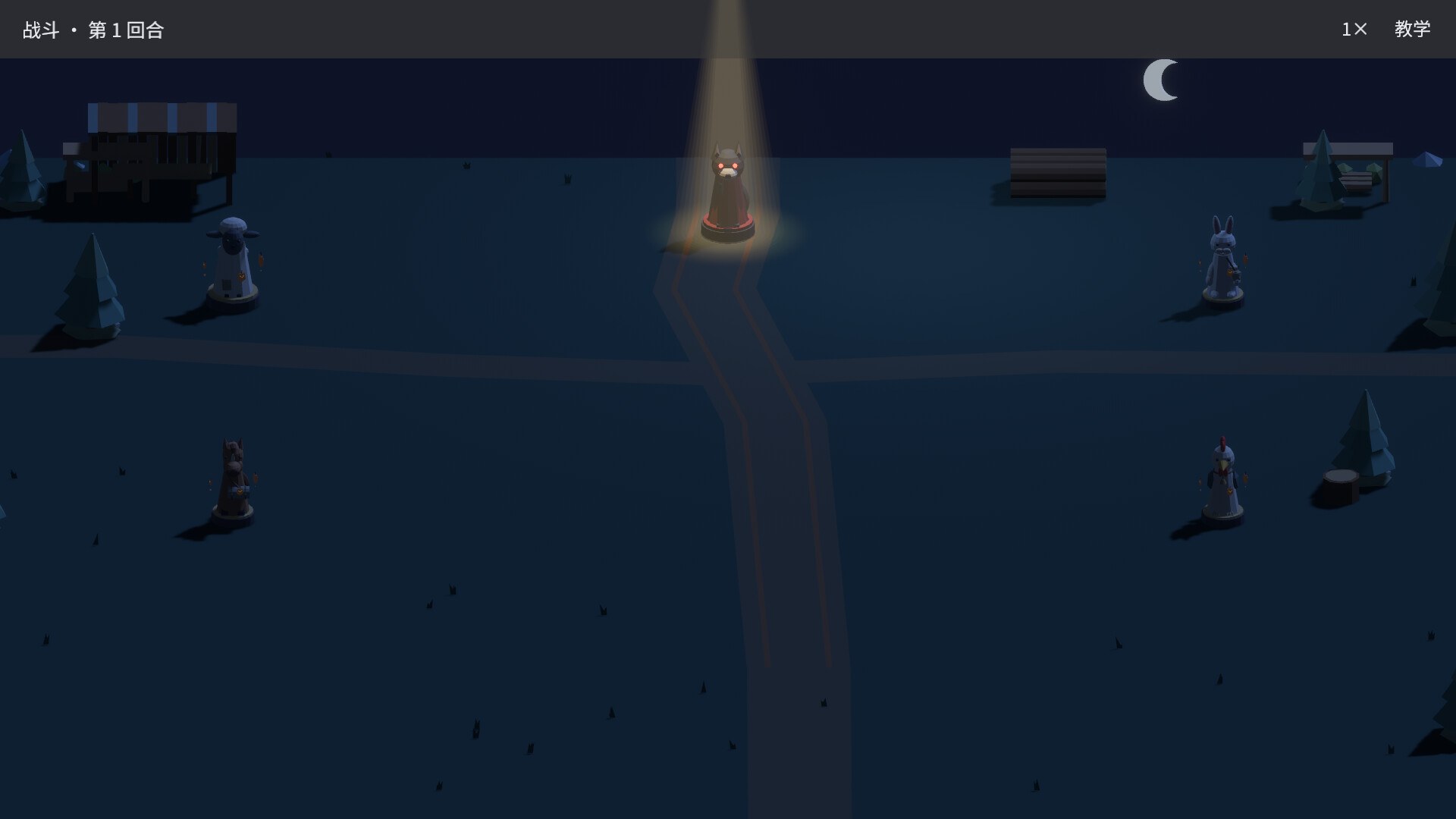
The second phase is the battle itself, and you decide when it begins. That is the key structural point: preparation and combat are not separate screens with a hard timer between them, they are two halves of one decision that you close yourself.
How Cards Shift Action Cycles
Every piece has its own skills and its own action cycle, and the cycle is what your hand manipulates. The store page describes the process as inspecting both sides' actions, targets and upcoming skills, then using your cards to shift your own pieces' action cycles. In practice that means three moves: bring a needed skill forward, respond to the Boss's plans, and set up the skills that follow.
- Read the enemy's upcoming actions, targets and skills first.
- Decide which of your skills must land this turn.
- Spend cards to pull that skill forward on its cycle.
- Use what is left to line up the skill that comes after it.
Morale as Initiative, Resource and Power
Morale does three jobs at once, which is what makes it the centre of the system. It sets turn order, because pieces act in order from highest to lowest Morale. It grows from taking hits, because taking direct damage also builds Morale. And it converts into power, because at maximum Morale a piece's next action unleashes an enhanced skill.
The store page frames the tension as preserving Health while timing your initiative and enhanced skills. A piece that has been raided down to low Health but has high Morale will act first and hit harder; a piece that has been kept safe but has low Morale may act last and simply watch.
Starting the Fight, and Wavering
You choose when the Stealth Phase ends. The cost of choosing badly is named on the store page: pieces with insufficient Morale suffer Wavering, leaving them temporarily unable to act. So the decision is not "is my party healthy enough" but "is my party's Morale high enough that everyone gets to participate".
| Decision | What the store page says happens |
|---|---|
| Keep building Morale | You keep countering Rumors and night raids with your limited hand |
| Start the fight early | Pieces with insufficient Morale suffer Wavering and cannot act temporarily |
| Take direct damage in battle | That piece gains Morale, moving it up the turn order |
| Reach maximum Morale | That piece's next action unleashes an enhanced skill |
Normal Mode Versus Tower Mode
Normal Mode is the constrained version: independent levels, a fixed party and a fixed hand. Nothing about your roster changes between levels, so all of your agency sits in card play and cycle management. Tower Mode opens two new layers: you choose your party and hand, and you recruit the Bosses you defeat and bring them along for the challenges ahead. That turns the same combat system into a team-building problem as well.
Failure, Restarts and the Cost of a Bad Attempt
The store page does not state what a loss costs or whether levels can be retried freely, so the retry rules are not documented yet. What is documented is recovery: during your climb you restore your party's Health at a campfire or a woodland hot spring, and the store page shows pieces sitting, chatting, soaking and resting before you set off again. Treat camps as the pacing valve for the run rather than as a reward.
Pacing Across Nine Levels
Nine levels is the whole published scope, split across two modes. Normal Mode presents them as independent encounters, so difficulty is likely to step up level by level rather than accumulate. Tower Mode chains challenges together and adds recruited Bosses to your team, which is the mode where a growing roster, not a single good turn, decides how far you get. The store page does not state how long a full run takes, so a completion-time estimate is not documented yet.
For the opening order of play, see the walkthrough; for a first-session plan, the beginner guide covers the same systems from the perspective of what to do first. The cards page goes deeper on the hand itself, and features lists the store page's feature set without the strategy layer.
FAQ
1.What is the core loop in Anshi?
Each level runs two phases. In the Stealth Phase you counter the Boss's Rumors and night raids with a limited hand while building Morale; then you choose when to begin the battle, where pieces act from highest to lowest Morale and maxed Morale unlocks enhanced skills.
2.Is there randomness in Anshi?
The store page says there is no gameplay randomness. That means the cards you hold and the order things happen are determined by the level setup and your choices rather than by random draws.
3.How do cards affect combat?
Cards shift your own pieces' action cycles. The store page describes inspecting both sides' actions, targets and upcoming skills, then using cards to bring a needed skill forward, respond to the Boss's plans and set up the skills that follow.
4.What happens if I start the battle too early?
Pieces with insufficient Morale suffer Wavering and are temporarily unable to act. The store page presents the decision as keep building Morale, or start the fight while your party still has strength to spare.
5.What is the difference between Normal Mode and Tower Mode?
Normal Mode uses a fixed party and hand across independent levels. Tower Mode lets you choose your party and hand and recruit the Bosses you defeat, then manage that team through a series of challenges.
More in Systems
More systems pages in Anshi.
References
Facts on this page are compiled from the references above. Items marked "to confirm" are single-source and not yet verified.